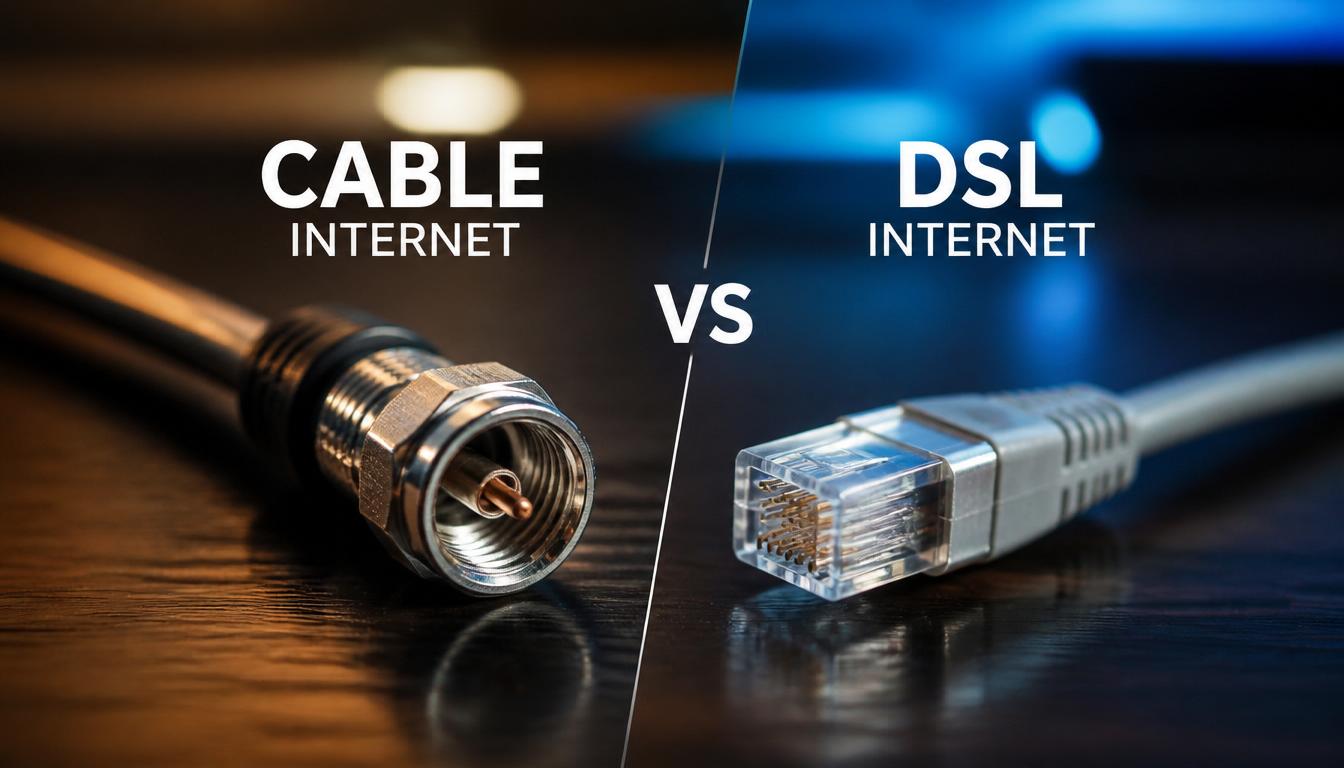
As you shop for internet service, many people choose to compare cable vs DSL Internet in an effort to get a good mix of speed, stability, and cost. Both technologies have already been around for years, but they are for different sorts of users and households. With the knowledge of DSL vs cable internet, you can make a good choice of internet service for your current and future online needs. Here, we will discuss the workings of DSL and cable internet, compare their performance, and talk about Cable internet vs 5G Home Internet.
What Is DSL Internet?
Internet via DSL (Digital Subscriber Line) technologies is provided on the same copper wiring used for telephony. DSL is different from dial-up, because you can surf the web while you’re making a phone call.
One of the primary reasons people take into account is DSL internet speed. The speed of the DSL Internet connection is usually 10 Mbps to 100 Mbps, depending on the provider and the distance from the service hub. But speeds tend to drop as you move away from the provider’s network equipment.
Benefits of DSL Internet
- Available throughout the countryside and in towns and suburbs
- Typically less expensive than fiber internet service.
- A less affected neighborhood usage dedicated connection
- Browsing, email and light streaming make for a suitable application.
Disadvantages of DSL Internet
- Slower speeds than cable internet.
- The performance will vary depending on the distance from the provider
- Not suitable for high-level gaming or several 4K streams
What is Cable Internet?
Cable internet is also known as coaxial cable internet and is provided on the same coax infrastructure as cable TV. It is one of the most widely used Internet technologies in the United States, since it can provide higher speeds than DSUs.
New cable companies can offer subscribers service speeds from 100 Mbps to multi-gigabit plans, making them apt for homes with numerous connected devices.
Benefits of Cable Internet
- Faster download speeds
- Enhance streaming, gaming and remote working capabilities.
- Widely available in urban and suburban areas
- Sustains high technologies such as DOCSIS
Limitations of Cable Internet
- Peak time speeds may be slower.
- Usually has a higher price tag than DSL service plans
- This could be a slower upload speed than a download speed.
DSL vs Cable Internet: Which Performs Better?
Cable has significantly higher download speeds than DSL, so it can be the perfect choice for you if you’re streaming in 4K, if you’re an online gamer, or if you’re working remotely and want to be sure you are getting the best connection. DSL internet can be a more cost-effective alternative for people with simpler needs.
If you have more than one person in your household using the internet at the same time, cable will generally be the better choice.
DOCSIS 4.0 vs DSL: Understanding the Technology Difference
The technology is called DOCSIS 4.0 and it’s leading the cable internet. So if we compare DOCSIS 4.0 vs DSL, clearly, cable internet has technology edge over.
With DOCSIS 4.0 technology, cable providers can deliver multi-gigabit download and upload speeds over their existing cable infrastructure, meaning consumers get faster speeds without needing a full infrastructure upgrade.
DSL has been and will continue to be a practical and effective solution for many needs, but limitations are present with it due to reliance upon existing telephone lines. To meet growing demands from the Internet, future applications and connected devices can more readily rely upon Cable Networks, enabled by DOCSIS 4.0 technology.
Best Budget Internet: Cable or DSL?
It depends on what you will be using your internet for. If the priority is monthly costs, DSL will typically have lower rates and can support activities like web browsing, emailing, and moderate streaming.
If you care more about getting the best performance and the money, cable internet will likely get you a bigger bang for your buck. Households with several users would likely benefit from paying a bit more in cash for higher cable speeds and overall faster internet service.
Light internet users can often find great deals in DSL, while a data-hungry household might get more value from cable internet.
Cable Internet vs 5G Home Internet
With the ever-growing world of wireless, many consumers are wondering when comparing Cable internet vs 5G Home Internet.
5G Home Internet delivers internet directly to your house using a provider’s wireless cellular network. The setup can be incredibly simple and usually provides the equipment at no extra cost to you.
Popular 5G Home Internet Plans
| Provider | Plan | Starting Monthly Price* | Typical Download Speed |
|---|---|---|---|
| T-Mobile Internet Provider | 5G Home Internet | $50/month | 87–415 Mbps |
| Verizon Internet Provider | 5G Home | $50/month | 85–300 Mbps |
| Verizon Internet | 5G Home Plus | $70/month | 300–1,000 Mbps+ |
| AT&T Internet Provider | Internet Air | $60/month | 90–300 Mbps |
Easy setup and reasonable costs aside, the constant speeds and lower latency on cable Internet are ideal for the gamer and intense user, although there are good points for the easy setup on 5G Home Internet.
Final Verdict
If you have to choose between Cable Internet or DSL Internet, cable internet is typically the superior choice in terms of speed, performance and future scalability. For those who need affordable internet for everyday use, DSL is a good choice. In the meantime, 5G Home Internet has proven to be a viable alternative for homes seeking wireless options and easy setup. To know more about Cable vs DSL Internet, get in touch with the Top Internet Plans customer care number.